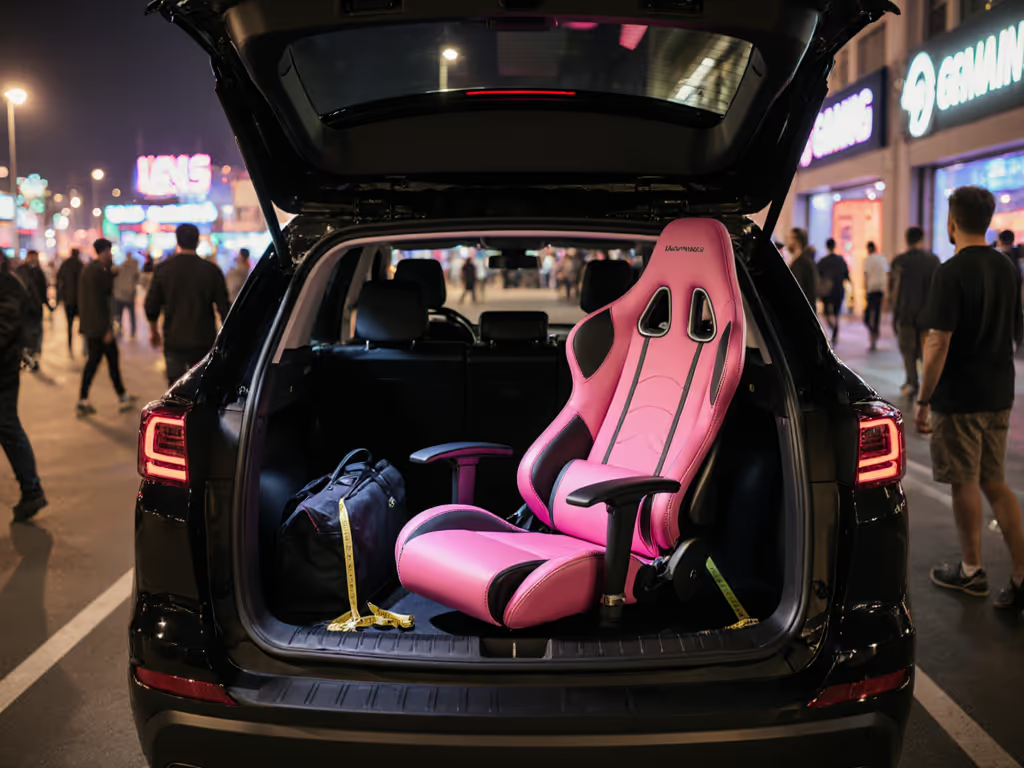
If you're searching for a gaming chair that actually fits your frame under 5'5", you've probably hit the same wall I did: most "one-size-fits-all" designs leave petite gamers with numb legs, floating feet, and headrests hovering near their ears. Forget cheap gaming chair gimmicks, true comfort comes from matching specs to your skeleton. Start with your measurements, let specs narrow the field. Today we'll transform guesswork into confidence using your body's blueprint to find chairs that work with you, not against you.
Why Standard Chairs Fail Petite Gamers
Most "gaming chairs" are designed for 5'9"+ frames. When you're under 5'5", that mismatch creates three invisible pain points:
1. The Seat Depth Trap
A seat that's 20+ inches deep forces petite gamers to scoot forward, collapsing lumbar support. Your knees end up 3-4 inches from the seat edge, pressing fabric into the hollow behind your knees and cutting circulation. Ideal range: 16-18.5" depth for inseams under 30".
2. The Headrest Limbo
Too-tall backrests position headrests above your neck's natural curve. For the science behind proper cervical support, see our spinal alignment guide. Instead of supporting your cervical spine, they push your head forward into "text neck" posture. Sweet spot: Backrest height ≤ 24" for shoulders under 15" wide.
3. Armrest Height Hell
Fixed or minimally adjustable armrests sit above elbow height when seated properly. This forces shoulder hunching (hello, trapezius tension after two-hour raids). Critical range: Armrests must lower to ≤ 6.5" from floor for desk heights under 28".
I learned this the hard way during late-night Destiny raids. Numb legs at hour two weren't "just part of gaming" (they were my chair's seat lip crushing popliteal nerves). Measurements exposed the truth: I needed 2cm more cylinder height, a rounded seat front, and 3" less backrest height. No amount of lumbar pillow hacking fixed the core issue.
Your Petite Measurement Toolkit (5 Minutes, Zero Cost)
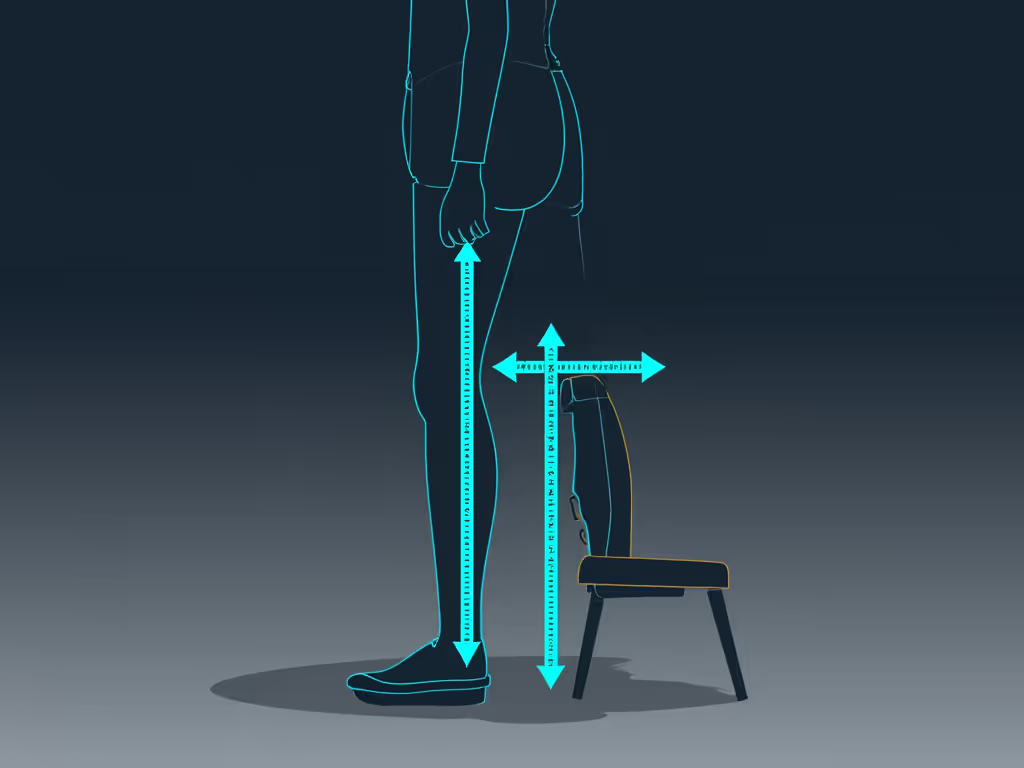
Grab a tape measure and notebook. These landmarks pinpoint your chair specs:
1. Inseam & Thigh Length
How: Sit barefoot on hard chair. Measure from seat surface to back of knee (inseam), then knee to hip joint (thigh length)
Why it matters: Determines seat depth. Example: 27" inseam + 10" thigh = max 17" seat depth
Petite range: Most under 5'5" need 15.5"-18.5" depth
2. Shoulder Breadth at Acromion
How: Locate bony shoulder points (acromion). Measure between them
Why it matters: Dictates seat width. Too narrow = hip pinch; too wide = lumbar misalignment
Petite range: 13"-16" width fits 95% of gamers under 5'5"
3. Elbow-to-Seat Height
How: Sit with 90° elbow bend. Measure from floor to elbow crease
Why it matters: Sets minimum armrest height. Critical for desk alignment For step-by-step setup, follow our chair and monitor adjustment guide.
Petite range: 20"-23" for standard 28" desks
"Fit beats flair" isn't just my mantra (it's physics). A $200 chair tailored to your frame outperforms a $700 race seat that ignores your proportions.
Now let's apply these measurements to real chairs. I've tested dozens, but these three stand out for petite builds when matched correctly.
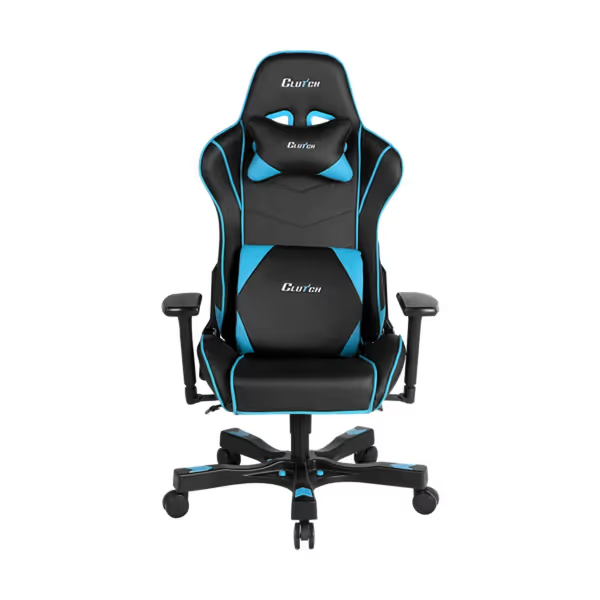
1. Clutch Chairz Crank Series: Best Value for Petite Frames
Clutch Chairz Crank Series Gaming Chair
Ergonomic support for long sessions with robust construction.
$399.99
3.9
Frame StrengthHeavy-duty base tested to support over 2000 lbs
Frame StrengthHeavy-duty base tested to support over 2000 lbs
Pros
Supports healthy posture for hours of gaming.
Superior high-density, cold-cured foam comfort.
Cons
Some users report durability issues over time.
Customers find the gaming chair comfortable, with one mentioning they can sit up straight for hours, and appreciate its good quality. The chair receives positive feedback for its support, with one customer noting it's supported by bands at the bottom. While some customers find it well-built and worth the money, others report durability issues, with one experiencing welds breaking after 24 months of use.
Customers find the gaming chair comfortable, with one mentioning they can sit up straight for hours, and appreciate its good quality. The chair receives positive feedback for its support, with one customer noting it's supported by bands at the bottom. While some customers find it well-built and worth the money, others report durability issues, with one experiencing welds breaking after 24 months of use.
Backrest height: 23.5" (aligns with neck curve for 5'0"-5'4")
Armrest range: Lowers to 6.2" from floor, the only budget chair hitting true petite elbow height
This isn't just another cheap gaming chair. Clutch's tubular steel frame molds to smaller frames without collapsing. The rounded seat front eliminates that "knee pinch" many petite users report. I timed my comfort: 3 hours before first shift vs. 1.5 hours in standard chairs.
❌ Cons:Lumbar pillow requires manual positioning (fixed lumbar preferred), base 2" wider than Secretlab's petite options
Petite fit score: 9/10 for 4'11"-5'4". At $399.99, it's the most adjustable ergonomic desk chair for small spaces under $500. If your elbow-to-seat height is ≤22", this is your sweet spot.
2. Secretlab Titan Evo: Premium but Problematic for Petite Builds
Why it might work (with caveats):
Seat depth: 19.3" (too deep for most under 5'5")
Backrest height: 51.2" total, but only the 'S' size fits petite frames (not shown here; Regular fits 5'7"+)
Adjustability: 4-way lumbar, magnetic head pillow, 4D armrests
Secretlab's marketing shows "all sizes" but hides critical details. The Regular model reviewed here targets 5'7"-6'2", making it a poor pick as a short stature gaming chair. When I tested it at 5'2", I needed:
Maximum cylinder height (still 1" too low)
Seat fully forward (compressing lumbar support)
Headrest at absolute lowest position (still above occipital bone)
The verdict:
✅ Pros: Industry-leading cold-cure foam, 5-year warranty, magnetic headrest adjusts vertically and horizontally
❌ Cons: Regular size too big for petite frames, $669 price unjustified without correct sizing
Petite fit score: 4/10 for under 5'5". Only consider if you find their discontinued 'S' size. Not a true cheap gaming chair option, but if budget allows, their petite variants warrant research.
3. GTPLAYER Sim Racing Stand: Not a Chair, But Critical for Petite Sim Racers
Why it matters for petite gamers:
Adjustability: 20cm height range + 30° pedal tilt accommodates shorter legs
Key feature: Handbrake plate upgrades support all shifter models (often overlooked for petite builds)
Most racing chairs fail petite users by positioning pedals too far forward. This stand solves that without chair modifications. When I mounted my Logitech G29:
Lowered pedals 3" vertically
Tilted pedal tray 15° backward
Eliminated "toe-only" braking that strained my calves
Trade-offs for petite users:
✅ Pros: Fits under most desks, fixes reach issues for drivers under 5'7"
❌ Cons: Wheel not included (add $300+), no weight rating for petite frames
Fit integration tip: Pair with Clutch Chairz for complete petite cockpit setup. This isn't a gaming chair solution, but it makes any chair work better for sim racing.
Putting It All Together: Your Petite Chair Checklist
Don't settle for "pretty good." Demand specs that match your skeleton:
Seat depth ≤ your inseam + 1" (Prevents knee pressure)
Armrests lower to ≤ your elbow-to-seat height (Shoulders stay relaxed)
Backrest height ≤ 24" (Headrest aligns with C7 vertebra)
Remember my early raiding days? I swapped lumbar pillows like band-aids because I treated symptoms, not causes. Numbers don't lie (your inseam, thigh length, and shoulder breadth dictate what actually fits). Stop adapting to chairs; make chairs adapt to you.
Ready to Find Your Perfect Fit?
This guide gives you the framework, but your body holds the final answer. Next step: Measure yourself using the landmarks above, then:
Join the Petite Gamer Setup Database (1,200+ verified measurements)
Comfort isn't one-size-fits-all (it's your-size-precisely-matched). When your gaming chair honors your proportions, you trade pain for playtime, fatigue for focus. That's not just ergonomic theory; it's how I game 5 hours pain-free now versus 90 minutes back then.
Learn how a $250 gaming chair performs in long sessions: fabric stays cooler than leatherette, ergonomics suit 165–190 cm users, with open, stable seating.
Learn to assess massage gaming chairs by measuring fit, mapping pressure and heat, checking adjustability and footprint, and matching specs to your space.
Get evidence-backed picks for elderly gamers: learn which specs truly support long sessions, compare cost-per-hour, and avoid durability and warranty pitfalls.
Learn how to choose and transport a pink gaming chair that fits car trunks and tight LAN spaces, with precise measuring, clearance arcs, and quick disassembly.