Video Gaming Chair Comparison: VR vs Standard
By Jamal Okoye • 19th Feb
Choosing between a video gaming chair and a VR motion chair isn't about picking the fancier option; it's about matching your body, playstyle, and gaming space to the chair that actually keeps you comfortable for hours. I've learned that lesson the hard way. Years ago, I'd numb my legs by hour two of a session, blame the chair design, and swap cushions like band-aids. Then I measured: inseam, thigh length, shoulder breadth. Turned out I needed a seat with a rounded front edge, 2 centimeters more height, and a taller back. That single shift from guessing to measuring changed everything. Numbers turned confusion into confidence.
Today, the choice between a standard gaming chair and a VR motion chair hinges on the same principle: your body's dimensions and how you actually play should dictate the shortlist. Let me walk you through the comparison so you can assess which belongs in your setup.
1. Rotational Freedom vs. Stability in Standard Positioning
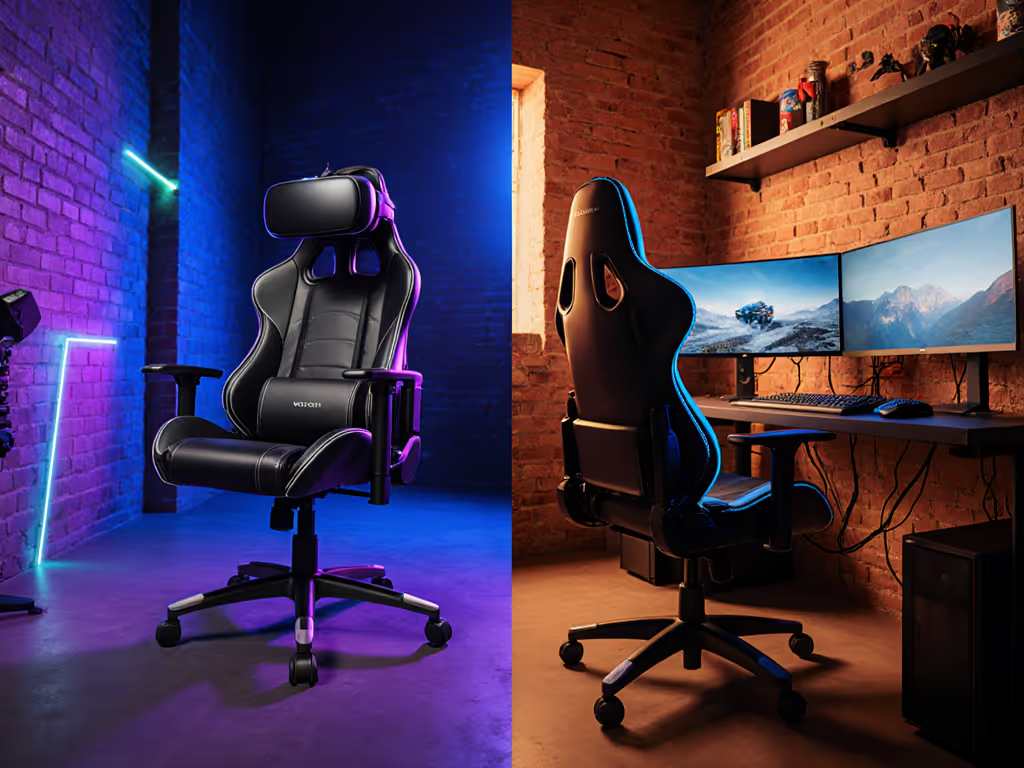
VR motion chairs, like the RotoVR Explorer, are built around one idea: your chair rotates as your head turns. No thumbstick turning; the seat swivels with you. This creates seamless head-to-body alignment during VR experiences where you're seated and turning constantly. For options designed specifically for this style of play, see our VR gaming chairs built for 360° comfort.
Standard gaming chairs lock you in place. They prioritize stability through a rigid base and fixed orientation. Your monitor or screen stays in front of you; you adjust your posture or use a controller to look around.
Trade-off: VR motion chairs excel at rotational immersion but demand setup and recalibration. Standard chairs require no special setup and work anywhere (office, tight apartment, desk farm).
2. Ergonomic Support: Depth, Height, and Backrest Alignment
Here's where measurement becomes non-negotiable. A perfect gaming chair matches your leg length, hip width, and torso height.
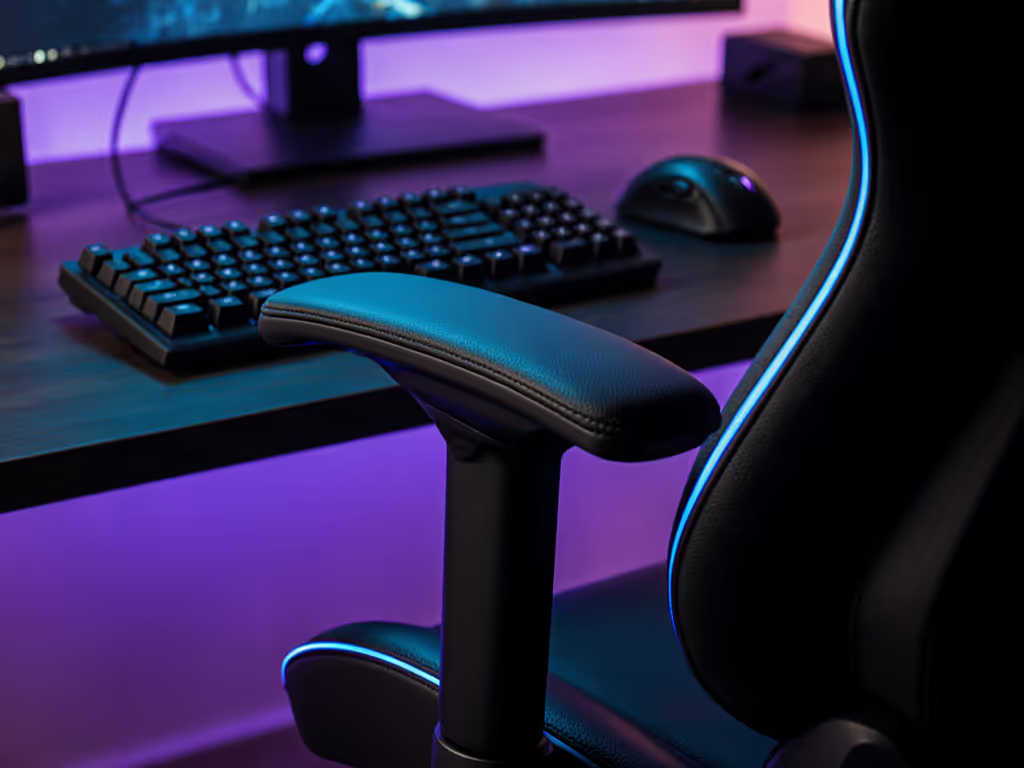
Standard gaming chairs offer adjustable seat depth, tilt tension, lumbar position, and headrest height, components designed to fine-tune support across a range of body types. You can dial in armrest height to your desk, adjust the seat-to-pedal distance, and position the lumbar support to your lower back curve.
VR motion chairs, by contrast, prioritize the rotating mechanism and often sacrifice traditional ergonomic adjustability. One reviewer noted the chair "isn't too ergonomic" and "only supports the lower part of my back."
What this means: If you're tall (>6'2"), have longer thighs, or broad shoulders, a standard gaming chair with full adjustability lets you translate measurements into comfort. VR chairs work better for average body types in shorter, focused sessions.
3. Immersion Level and Sensory Feedback
VR motion chairs deliver rotational immersion, the chair follows your head, creating what feels like a unified body-to-virtual-world link. Add a rumble pack, and you feel impacts and vibrations through the seat, enhancing sensory presence.
Standard gaming chairs immerse you through stability and positioning. A well-fitted, rigid chair prevents wobble and micro-movements, letting force feedback from a racing wheel or high-fidelity audio hit without distraction. The immersion is consistent, not dynamic.
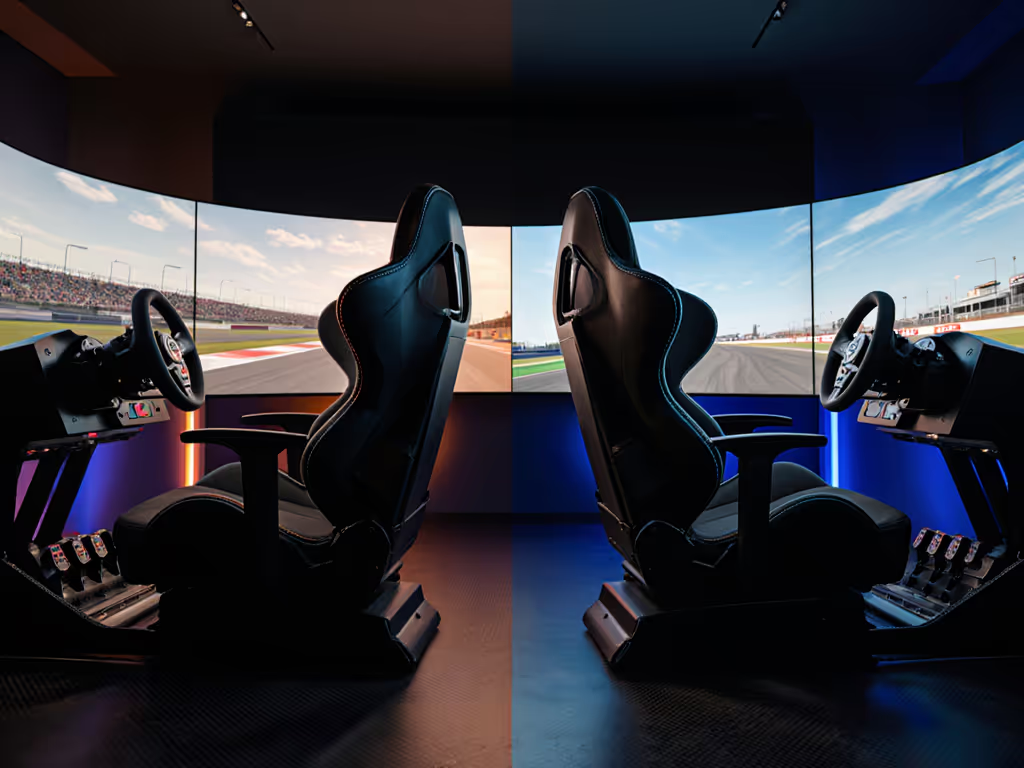
The reality: VR immersion is flashier. Standard immersion is deeper for focus and precision. A Formula 1 simulator rig uses a locked, rigid cockpit (not a moving chair) because muscle memory and control matter more than rotational wow factor. Learn how chair stability affects aim precision in our Gaming Chair Physics guide.
4. Space, Footprint, and Placement Flexibility
Standard gaming chairs are compact. A quality chair fits under or beside a desk, tucks into corners, and integrates into multi-monitor or racing rig setups without eating floor space.
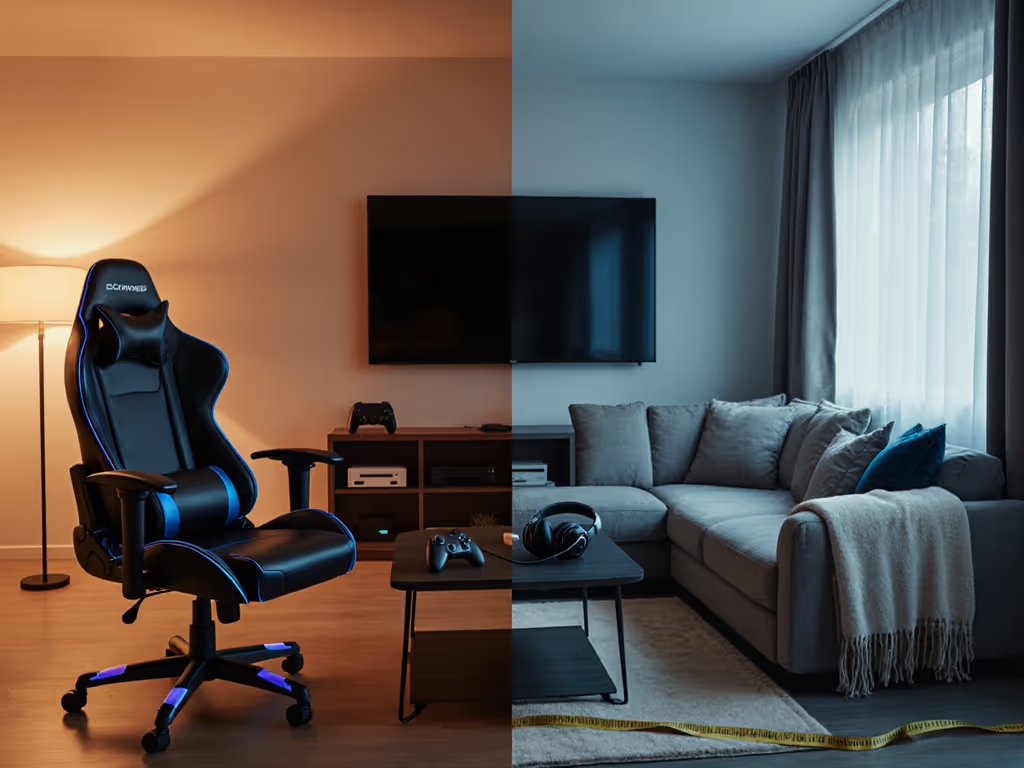
VR motion chairs require rotational clearance. The RotoVR and similar models need 360-degree swing room. A small apartment, dorm, or tight desk nook becomes a dealbreaker. If space is your constraint, check our small space gaming chairs guide with exact fit measurements.
Consider: Does your gaming space allow a chair to spin freely? If not, a standard gaming chair wins by default, and saves you money.
5. Material Breathability and Heat Management
VR motion chairs often use PU leather or dense foam to withstand rotational stress and rumble vibrations. This means heat buildup during long sessions, exactly what you don't want during a 3-hour VR grind or a streaming marathon.
Standard gaming chairs increasingly offer mesh backs, hybrid fabrics, and perforated PU, which breathe far better. Premium options use memory foam with ventilation channels or high-density foam that resists flattening while staying cool.
The gap: Standard chairs give you material choice. VR chairs lock you into a form factor that prioritizes mechanics over thermoregulation.
6. Setup Complexity and Daily Usability
Standard gaming chairs: unbox, adjust height/tilt/armrests, sit down. Done. You can tweak on the fly without thinking.
VR motion chairs require calibration, connection to your headset, and occasional recalibration, especially if you turn quickly or move the chair. One tester noted that "when I turn, it seems to decalibrate my center position for some reason. So I always have to recenter, which is kind of annoying."
Real talk: If you value "plug it in and play" simplicity, VR motion chairs introduce friction. If you're willing to trade setup time for rotational immersion in specific VR titles, that friction is worth it.
7. Game Compatibility and Use Cases
Standard gaming chairs work with every game, every platform, every playstyle. FPS, RPG, racing, streaming, they adapt because they're passive.
VR motion chairs shine in seated VR titles that reward rotational freedom: cockpit sims (Dig VR), action games (Iron Man VR), and shooters where turning is constant. They're less valuable for standing VR, standing gameplay, or titles where rotation isn't central to immersion.
Honest assessment: A VR motion chair is specialized gear. A standard gaming chair is universal.
8. Cost and Long-Term Value
Quality standard gaming chairs range from $250 to $1,200+ depending on adjustability, materials, and brand durability records. You're paying for engineering and component quality.
VR motion chairs (like RotoVR Explorer) cost more for the rotational mechanism and rumble hardware, but you're buying a single-use accessory. Once you're done with seated VR, the novelty fades.
Value proposition: Standard chairs retain utility across all future games and playstyles. VR chairs are a bet on a specific immersion feature staying central to your gaming.
9. Durability, Warranty, and Repairability
Standard gaming chairs from established brands carry multi-year warranties, documented foam longevity, and available spare parts (casters, cylinders, armrest pads). Understand what those warranties really cover in our Gaming Chair Warranty Coverage guide. You can maintain them for 5-10 years.
VR motion chairs are newer. Durability data is limited. The rotational mechanism adds a failure point. Repairs may mean shipping the entire chair back (no modular parts).
Risk: Standard chairs are proven. VR chairs are still proving themselves.
10. Which Chair Matches Your Situation?
Measure yourself first. Here's how to decide:
Choose a standard gaming chair if:
- You play across genres (FPS, RPG, racing, streaming) and want one chair for everything.
- Your space is tight or doesn't allow 360-degree chair rotation.
- You're tall, petite, or outside average body dimensions, standard chairs offer more adjustability.
- You sit for 3+ hours and need materials that breathe and stay cool.
- You want a chair that lasts 5-10 years with low maintenance.
- Ergonomic precision matters more than novelty.
Choose a VR motion chair if:
- You spend most gaming time in seated VR titles with heavy rotational gameplay.
- You have a dedicated VR space with clear floor room.
- You're willing to trade setup friction for rotational immersion.
- You're average-sized and don't need extensive adjustability.
- You want to try cutting-edge motion feedback in the next few years, knowing the tech may evolve.
Moving Forward
The wrong chair choice costs you money, comfort, and immersion. The right one multiplies all three. Your body is the measuring tool, not the marketing copy, not the color scheme, not the hype cycle. Your VR seating ergonomics or standard gaming comfort hinges on the distance from your hip to your knee, your shoulder width, and whether your upper back naturally aligns with a headrest or lumbar support.
Take 10 minutes now to measure: inseam, thigh length, shoulder breadth, hip width. Jot them down. Then cross-check against the shortlist you've narrowed down. You'll skip months of regret and the cushion-swapping cycle I used to chase.
If you're still weighing options, explore in-depth reviews of specific chairs, pressure-map studies that show real 2-4 hour comfort data, and forums where users with your body type report long-term durability. Look for transparent trade-offs, not marketing polish. The chair that's right for someone else's body or playstyle is just noise. The one that matches your measurements and setup? That's the one that earns hours of distraction-free gaming.
Related Articles