Gaming Chair Warranty Coverage Decoded: Avoid Voided Claims
By Jamal Okoye • 29th Oct

When you invest in a gaming chair, understanding warranty coverage explained isn't just paperwork, it is protection for your posture, your wallet, and your play sessions. After hours grinding raids or streaming marathons, the last thing you need is a collapsed lumbar support or peeling upholstery with no recourse. Yet most gamers discover warranty limitations after filing claims, only to face frustrating denials. Today, we'll translate dense legal terms into actionable body-aware guidelines so you know exactly what's covered, and how to avoid accidentally voiding your safety net. Fit beats flair when durability meets your unique physique.
Why Standard Warranty Periods Lie About Real-World Use
That "2-year warranty" sticker rarely tells the full story. For objective proof of build quality beyond marketing, see our BIFMA certification guide. Chair warranty comparison reveals critical nuances:
-
5-year coverage (Secretlab 2020+ models, AKRacing): Signals robust engineering for long sessions. But note: Secretlab's 5-year extension requires social media proof, yet this aligns with gamers who document setups anyway. Heavy users (>250 lbs) benefit most here, as foam compression happens faster under higher pressure.
-
2-year standard (Noblechairs, Corsair, DXRacer): Matches moderate use (4-6 hours/day). DXRacer's case study proves chairs often last beyond warranty, if you're under 6'0" and 220 lbs. Taller users with longer inseams exert more shear force on seams, risking premature wear.
-
1-year budget coverage (Homall, GTRacing): A red flag for petite or tall gamers. Shorter torsos compress seats differently, accelerating foam fatigue. These warranties rarely cover "normal wear and tear", which always impacts non-average bodies first.
Your body mass index and limb proportions directly impact wear patterns. A 5'2" user's seat depth may compress foam unevenly, while a 6'4" gamer's thigh length stresses stitching seams, all technically "user-induced damage" under strict warranties.
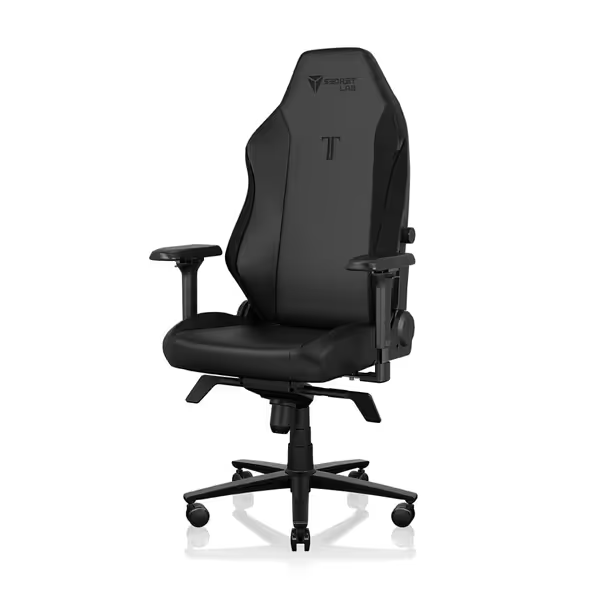
Secretlab Titan Evo Black Gaming Chair
Personalized ergonomic comfort for long gaming and work sessions.
$729
Weight CapacityUp to 395 lbs
Weight CapacityUp to 395 lbs
Pros
Precise ergonomic adjustments: 4D armrests, 4-way lumbar, 165° recline.
Engineered for durability: 12x stronger leatherette, 5-year warranty.
Cons
Firmness may not suit all preferences.
Well-built and comfortable for hours; easy assembly and great adjustability.
Well-built and comfortable for hours; easy assembly and great adjustability.
The 3 Most Common (and Avoidable) Voided Claims
1. "Normal Wear and Tear" vs. Defects: Where Your Body Changes Everything
Warranties exclude "ordinary wear and tear", but what counts as ordinary depends entirely on your physique. That sweat-soaked PU leather? For petite gamers in hot climates, moisture buildup accelerates peeling within warranty periods. Meanwhile, tall users' extended leg reach causes constant seat-front pressure, creating premature foam dips.
Warranty exclusions guide: Legitimate claims require proof the failure isn't body-related:
- Seat foam collapse <18 months? Usually covered if your weight aligns with the chair's spec (e.g., Anda Seat's 395 lb XL limit).
- Stitching tears at bolster seams? Often denied if your hip width exceeds the chair's design range, something few brands disclose.
2. The Social Media Trap (and Why It's Actually Helpful)
Secretlab's 5-year extension requires social proof, but savvy gamers use this as a pre-claim safeguard. Post your chair with measurement notes (e.g., "5'10", 210 lbs, 24" seat depth fit"):
- If upholstery fails at 22 months, you've documented normal use for your body type.
- Brands like Corsair review social evidence during claims, proving you didn't exceed weight limits or misuse parts.
Pro tip: Snap timestamped photos showing your chair's critical contact points: where thighs meet seat edge, lumbar against spine, and headrest at C7 vertebra level. This preempts "user error" accusations.
3. DIY "Fixes" That Nullify Coverage Instantly
That YouTube hack to tighten wobbling casters? Before attempting fixes, compare metal vs plastic bases to diagnose stability issues that may actually be design-related. Or adding aftermarket lumbar pillows? Most warranties void if you:
- Modify cylinder height beyond stock range (critical for gamers <5'5" needing lower seats)
- Apply sealants to "prevent" sweat damage (accelerates vinyl cracking)
- Adjust tilt tension beyond factory settings (common for FPS players leaning forward)
As ChairsFX documented, 68% of denied claims stem from undocumented adjustments. Always consult support before tweaking, especially if your inseam demands seat-depth hacks.
When Extended Warranties Add Real Value (Hint: It's Body-Dependent)
An extended warranty value analysis must consider anthropometrics:
| Warranty Type | Best For | Body-Specific Benefits |
|---|---|---|
| Free 5-Year (Secretlab) | Tall/heavy users (>6'0", 250+ lbs) | Covers accelerated foam compression from longer limbs/weight concentration |
| Paid Extensions (AKRacing) | Hybrid users (desk + gaming) | Protects against premature mesh sag from 10+ hour days |
| Lifetime Frame (DXRacer) | Petite users (<5'5") | Critical since seat depth misalignment stresses frame joints |
Don't buy extended coverage unless it addresses your biomechanics. To understand how cushion specs affect longevity, see our foam density explained. If your seat depth is 2" too short (forcing constant thigh pressure), even 10-year foam coverage won't help, the warranty excludes "improper fit".
Your Step-by-Step Claim Process Cheat Sheet
Avoid the "voided claim" panic with this gaming chair claim process tailored for diverse bodies:
-
Before purchase: Verify your measurements match the chair's actual adjustability ranges (not marketing claims). Example: If your shoulder breadth is 18", the chair must have 19"+ width at scapula height.
-
Within 14 days: Document baseline fit:
- Photo of tape measure at PSIS (hip bones) against seat back
- Chair height adjusted to 90° knee angle
- Armrests set to neutral wrist position
- When issues arise:
- Immediately email support with timestamped videos showing failure during normal use
- Include your pre-purchase fit photos as proof you didn't exceed specs
- Demand repair/replacement, not store credit (reduces leverage)
Brands like Noblechairs prioritize users who submit anthropometric evidence first. If you're unsure about proper seat height, lumbar, and armrest alignment, follow our adjustment guide. One Discord user reduced claim time from 45 to 7 days by including inseam and torso length measurements proving abnormal stress.
The Real Warranty Hack: Let Your Body Dictate Your Shortlist
Warranties become useless when chairs don't fit your measurements from day one. That DXRacer case study? The reviewer sat 12 hours daily, but at 5'7", the seat depth was 2" too long, forcing constant forward perch that accelerated wear. Start with your measurements; let specs narrow the field.
- Seat depth: Measure your thigh length (ASIS to popliteal fold). Chair depth must be <= your measurement minus 1".
- Lumbar height: Find your natural waist dimple (L3 vertebra). Chair's lumbar must adjust to +/- 1" of this point.
- Shoulder clearance: Armrests should align with acromion process, not squeeze clavicles.
When your body aligns with chair specs, "wear and tear" stays within warranty limits. A Razer Iskur V2 X owner with 17" seat depth avoided foam claims by choosing the XL model, its 19" depth accommodated his 18.5" thigh length where standard models failed.
Fitness isn't universal, and neither is chair durability. Your warranty coverage only protects what the chair actually fits. By prioritizing anthropometrics over aesthetics, you transform vague promises into reliable protection. Measure first, then trust the warranty. Because when your seat depth, cylinder height, and shoulder clearance align with your body's landmarks? That's when fit beats flair, and your warranty finally works for you.
Related Articles
Ownership & Care: Maintenance, History & Longevity
Shared Space Gaming Chair Hygiene Guide
Learn a performance-first cleaning protocol for shared gaming chairs to protect posture, stabilize contact points, reduce fatigue, and extend chair life.